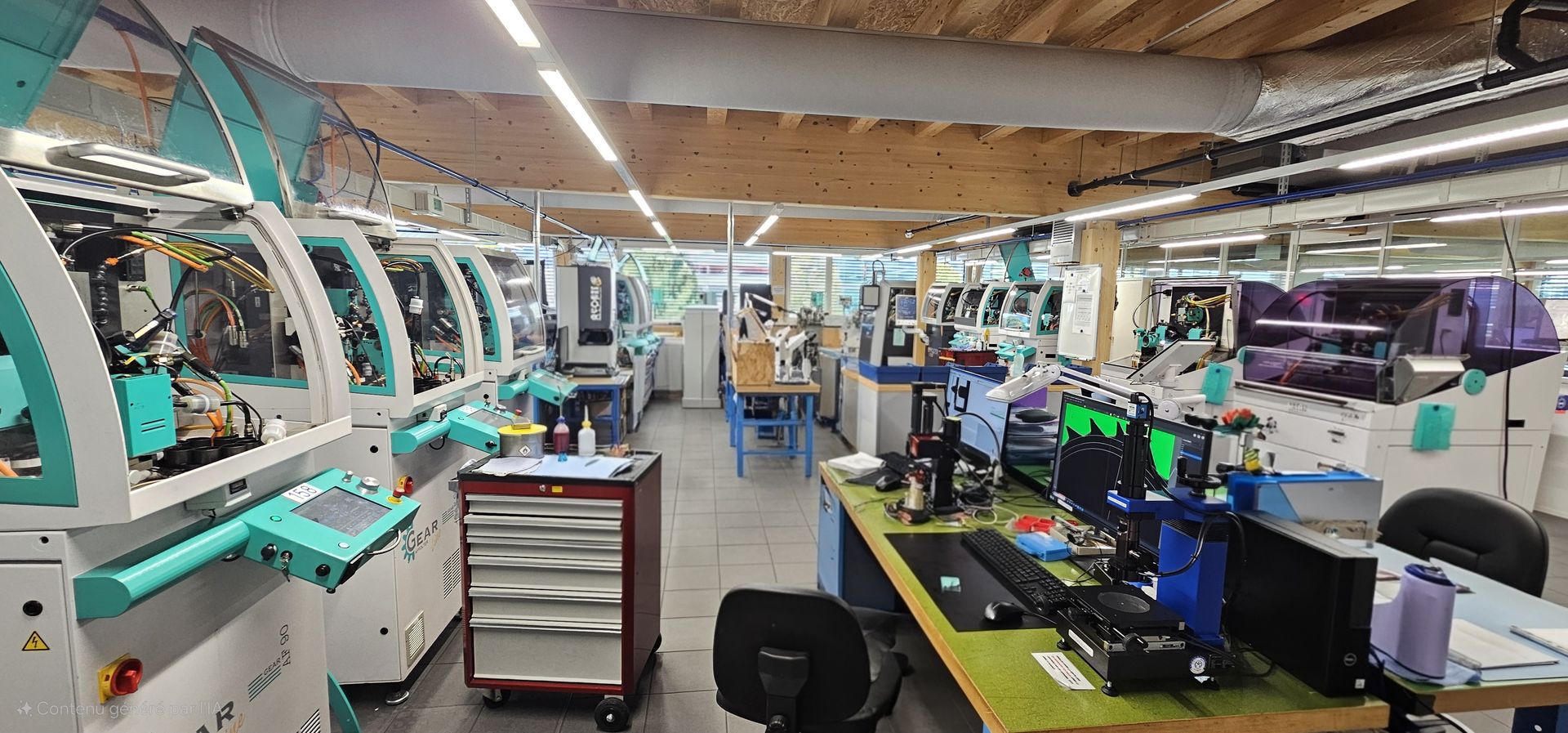
PINION GEAR CUTTING
The gear-cutting operation consists of machining the teeth on the outer diameter of a turned blank.
This is a complex process that requires sophisticated tools such as hobbing cutters, arbors for holding the blanks, and great discipline in managing the thirty or so parameters needed to achieve a flawless setup.
The main challenges lie in the very small size of the parts, the loading of these components, and the stringent surface finish requirements (machining burrs, marks during loading).
As with wheels, concentricity is a critical factor that must be strictly maintained.
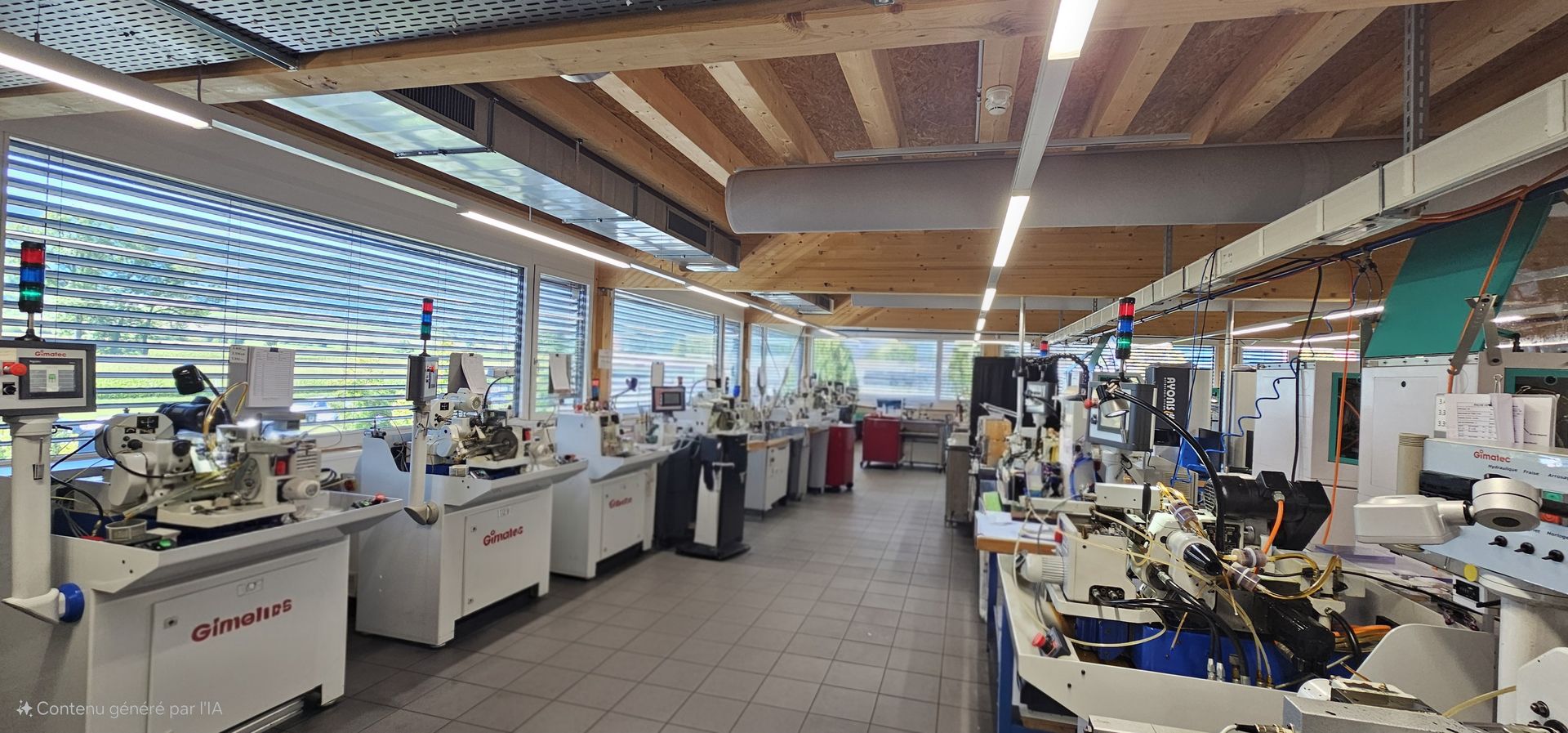
WHEEL GEAR CUTTING
Unlike pinion cutting, the simplicity of the stamped wheel profile makes setup work easier.
A wheel generally has between 30 and 120 teeth. They are mainly cut in stacks using hydraulic clamping, with semi-automatic or automatic loading through an oil bath.
During this operation, machining burrs, scratches, and friction marks must be avoided. Concentricity is a critical factor in the manufacturing process (precision under 10 microns).